
Distribution networks are collapsing under the pressure of renewables. Will batteries or management save them?
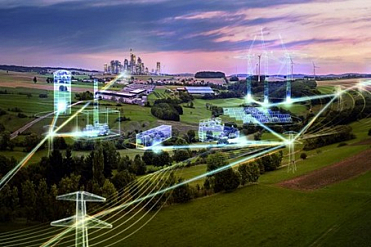
The integration of renewable energy sources (RES) into distribution systems is fundamentally changing the physics and philosophy of how the power industry operates. What was a stable, unidirectional, and inertial system for decades is now changing into a dynamic, bidirectional, and power-distributed structure.
Extremely important document for the implementation of BESS systems
A technical study published in the journal Elektroenergetika (TU Košice, 2022) analyzes the protection and operational requirements when connecting distributed sources to networks in Slovakia and the Czech Republic. From a practical point of view, especially in the development and implementation of BESS systems, this is an extremely important document.
Centralized vs. decentralized production - a physical turning point
The traditional energy model was built on:
large synchronous generators
high inertia
significant short-circuit currents (5–8 × In)
one-way energy flow.
Today's model with a high share of PV and battery systems is based on:
power converters
low or zero mechanical inertia
limited short-circuit contribution (max. approx. 2 × In)
bidirectional power flow.
This fundamentally complicates protection, selectivity, voltage stability and frequency stability. Distribution networks have historically not been designed for this model.
Electricity quality: the boundaries are clear
According to the STN EN 50160 standard and the technical conditions of distribution companies, the power factor (cos φ) must be controlled within precisely defined ranges, the total harmonic distortion (THDU) must not exceed 8%, single-phase sources are limited to 4.6 kVA and higher harmonics must be measured according to EN 61000-4-7.
For BESS projects, this means:
➡️ power electronics design is not only about efficiency, but also about network quality
➡️ active harmonic filtering is increasingly important
➡️ reactive power is becoming a stability management tool
Categorisation of sources: power determines obligations
Sources are divided according to power (A–D) according to European Regulation 2016/631 and the implementation of individual distribution companies.
Practically:
-up to 100 kW → category A
-100 kW – 5 MW → category B
-5 MW – 20 MW → category C
-over 20 MW → category D
The higher the category, the stricter the requirements for LVRT (fault ride through), protection, synchronization and communication with the dispatching center. For large BESS projects (10–50 MW), we are already in category C or D, where the requirements are significantly stricter.
Protection systems: the converter is not enough
Key protections for LV connections include undervoltage, overvoltage, underfrequency / overfrequency (81U / 81O), ROCOF (81R – df/dt), synchronization protection and automatic reconnection.
Fundamental requirement: For installed power above 10 kVA, a separate network protection must be used, separate from the source control. This is an often underestimated detail in development projects.
LVRT – the most important technical condition
One of the most crucial parts of the study is the analysis of the ability of the sources to remain connected during a fault (Low Voltage Ride Through).
The source must be able to withstand a voltage drop of up to 5% of the nominal value, in some cases up to 0%, for 150–250 ms and then stably resume operation. For higher categories (C, D) these requirements are even stricter.
This has a fundamental impact:
-cheap converters often fail type tests
-LVRT certification is key
-grid-forming technologies gain a competitive advantage.
Frequency stability and ROCOF
Distribution systems require a maximum frequency change rate of ±2 Hz/s, measured as a derivative over 0.5 s. With high penetration of inverter sources, the problem is low inertia, fast fluctuations and the risk of cascading source disconnection
Therefore, there is an increasing discussion about:
-synthetic inertia
-grid-forming BESS
-active frequency support.
Differences between distributions
The study points out the differences between:
-ZSD, SSD, VSD (SR)
-ČEZ, EG.D (CR).
The biggest differences are in category D and synchronous sources. This means:
- projects are not universally transferable
- each large project requires an individual technical analysis
- differences in LVRT curves can affect the choice of technology.
Strategic importance for the future
The document shows several fundamental trends:
- Distribution networks are becoming an actively controlled system.
- Protections are no longer just a safety element, but a tool for stability.
– Inverter sources without intelligent control can destabilize the system.
Battery systems are becoming a key stabilizing element. The future will not be about passive connection of sources. It will be about intelligent control, dynamic stabilization, flexibility, synthetic inertia and coordination with dispatching.
Conclusion
Integrating RES into distribution systems is no longer a question of “if”, but “how safely and stably”. Technical requirements are tightening. Distribution systems are changing. Sources must be intelligent.
And this is where the space for modern BESS systems, advanced EMS solutions and grid-forming technologies is emerging.
Energy is moving from the era of performance to the era of control. And those who understand the technical details of protections, LVRT and stability will shape its future.