
Low sunlight and extreme winter snow are no obstacle. A large solar power plant is taking shape in Norway.
The expansion of solar energy is being driven by growing electricity demand and simplified project permitting.
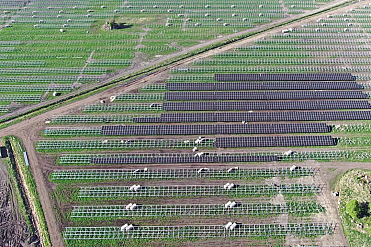
The northern part of Europe does not offer particularly ideal conditions for the development of photovoltaics. Nevertheless, large solar parks are also being built there, and the installed capacity of these sources has already reached gigawatt levels. Although photovoltaics in Norway still lag behind other countries in the region, large-scale ground-mounted installations are now beginning to emerge there as well.
Once completed, the project in the town of Kile will rank among the country’s largest solar power plants. It is being constructed by the Czech company Greenbuddies for Differ Energy. The site is located in the Gudbrandsdalen valley at an altitude of approximately 868 metres above sea level, which means that it is exposed to extreme snow conditions during the winter.
The power plant, with an installed capacity of 8.5 MWp, is being built on the site of a former mink farm that was decommissioned several years ago. Construction began in May 2026, with the Czech company responsible for almost the entire preparation, supply and turnkey construction of the project.
A total of 12,766 photovoltaic panels, each with an output of 650 Wp, and 21 inverters rated at 350 kVA will be installed at the site.
“Nordic markets are specific because their energy mix has historically been very different from that of Central or Southern Europe. This makes it all the more interesting that projects of this scale are now being developed here and that photovoltaics are gradually finding their place. We are travelling north to install solar power plants increasingly often,” says Dan Štajner, the company’s Sales Director.
Photovoltaics Enter the Land of Hydropower
Norway has one of the lowest-emission electricity sectors in the world. In 2025, it generated approximately 160 TWh of electricity, with hydropower plants accounting for more than 88% of total production.
A further approximately 10% to 11% came from wind power. Thermal generation, waste incineration and other renewable sources, including photovoltaics, accounted for only a few percent of total electricity production.
It was precisely the exceptionally strong position of hydropower that meant the development of photovoltaics was not considered a priority for many years. However, the situation is beginning to change. Increasing electrification in transport, industry, hydrogen production, and oil and gas operations is driving up electricity consumption and creating demand for new generation capacity.
According to available data, the installed capacity of photovoltaic power plants reached approximately 875 MW by the end of 2025. Around 117 MW of new capacity was added during the year alone. Although this remains a relatively small market compared with countries further south in Europe, its growth rate is among the highest in Northern Europe.
Most of the market currently consists of rooftop photovoltaic systems installed on commercial buildings, logistics centres and industrial facilities. Larger ground-mounted power plants remain relatively rare, which is one of the reasons why the Kile project ranks among the most significant planned solar investments in the country.
Advantages and Disadvantages of the Location
One of the most common questions regarding the development of photovoltaics in Norway is how solar electricity generation can be economically attractive in a country with long winters and short days. However, the decisive factor is not the length of the day during winter, but the total annual amount of solar irradiation.
In southern Norway, annual solar irradiation is comparable to that of certain regions in northern Germany, the Netherlands or Belgium, where photovoltaics are already an established source of electricity. The Oslo region, for example, receives annual solar irradiation of approximately 900 to 1,000 kWh/m², which is only around 15% to 20% lower than in southern Germany.
Another advantage of northern countries is their low operating temperatures. The output of silicon photovoltaic panels decreases as temperatures rise, typically by approximately 0.3% to 0.4% for every degree Celsius. The colder climate therefore improves their efficiency for much of the year.
Higher yields are also supported by solar radiation reflected from snow cover, which can increase electricity production on clear winter days. However, designers must use more robust support structures capable of withstanding high snow loads and select a steeper panel tilt so that snow can slide off the surface naturally.
Larger Projects Also Benefit from Legislation
The development of ground-mounted photovoltaic power plants has also been supported by changes to the regulatory framework. Norwegian authorities increased the capacity threshold above which projects must undergo a lengthy licensing procedure under the Energy Act from 1 MW to 10 MW. This step has significantly accelerated the preparation of medium-sized projects and reduced the administrative burden on investors.
At the same time, increasing emphasis is being placed on energy decentralisation and corporate energy security. Companies are investing in their own electricity generation not only to reduce emissions, but also to protect themselves against fluctuations in electricity prices on the Nordic Nord Pool market.
The complementary nature of individual renewable energy sources is another important factor. Hydropower plants function as enormous energy storage facilities and are capable of regulating production very flexibly. Photovoltaic systems generate the most electricity during sunny spring and summer days, when demand tends to be higher and water reservoirs can be preserved for the winter period. Combining the two technologies therefore increases the flexibility of the entire electricity system.
The Whole of Scandinavia Is Accelerating the Development of Photovoltaics
Although Northern Europe is traditionally associated primarily with hydropower and wind energy, photovoltaics are among the fastest-growing segments of the energy sector.
Sweden is the region’s largest market, with the installed capacity of photovoltaic power plants exceeding 5 GW by the end of 2025. The country connects hundreds of megawatts of new capacity every year, with growth spread across residential properties, commercial rooftops and large ground-mounted power plants.
Denmark is one of Europe’s leaders in combining wind and solar energy. Last year, photovoltaic power plants in the country had already reached an installed capacity of more than 4.6 GW, while large solar parks are becoming a standard part of energy projects alongside wind farms.
Finland, however, is experiencing the most dynamic growth. Only a few years ago, the country had just a few hundred megawatts of installed photovoltaic capacity. Today, dozens of large-scale projects with a combined capacity of several gigawatts are being prepared. Analysts expect Finland to become one of the fastest-growing solar markets in Europe over the coming years.
Source: www.energie-portal.sk